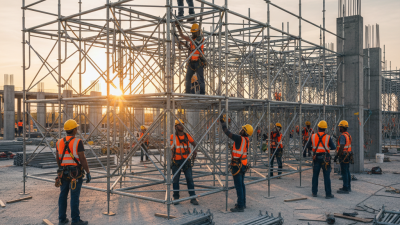
Why Choose Scaffolding Pipe for Global Projects?
Global projects demand materials that can perform across changing climates, labor practices, and construction schedules. Scaffolding Pipe remains a practical choice because it combines structural strength, modular assembly, and transport efficiency. A standard steel tube can support working platforms, access routes, and temporary protection when engineers design the system correctly.
Dr. John W. Hinze, a respected construction-safety researcher, once observed, “Safety performance depends on planned work, not on luck.” His point applies directly to Scaffolding Pipe selection. Wall thickness, outside diameter, coupling quality, surface treatment, and load calculations must match the project environment. Galvanized pipes may resist repeated moisture exposure, while painted or untreated steel can require closer inspection near coastal sites. Small details matter.
Field experience also reveals an uncomfortable truth. A strong pipe does not create a safe scaffold by itself. Poor bracing, uneven ground, rushed installation, or damaged fittings can weaken an otherwise reliable structure. This is where global projects become complicated. Local standards, inspection routines, and worker training may differ considerably. Therefore, buyers should verify mill certificates, dimensional tolerances, corrosion protection, and traceability before shipment.
The decision is not only about price. It concerns predictable performance at every stage, from a warehouse in Shanghai to a construction site in Rotterdam or Dubai. Scaffolding Pipe can support efficient project delivery, but only when engineering judgment, documented quality control, and disciplined site supervision work together. That balance is not perfect. It requires continuous review.
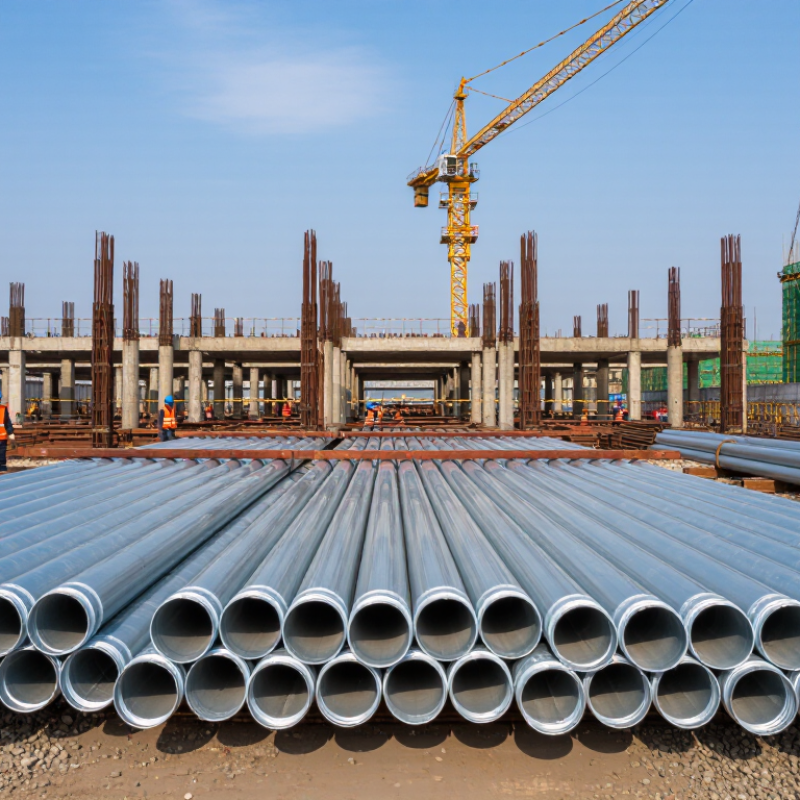
What Is Scaffolding Pipe and How Is It Used?
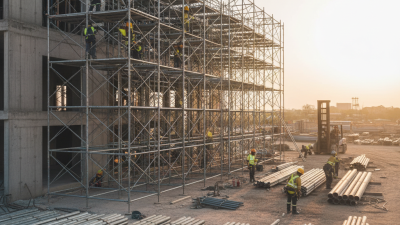
Scaffolding pipe is a tubular member used to build temporary access and support structures around buildings, bridges, and industrial sites. A typical tube scaffold uses vertical standards, horizontal ledgers, and crosswise transoms. Couplers connect the pipes, while platforms give workers a stable place to stand and handle tools. Crews use these structures for tasks such as bricklaying, façade repairs, painting, and equipment maintenance. Pipe dimensions and connections vary by system, so components should not be assumed interchangeable. A small mismatch can affect how securely joints hold. OSHA’s Scaffolding eTool cites estimates of about 4,500 scaffold-related injuries and 60 deaths annually in the United States. The numbers are sobering.
In the field, pipe condition matters as much as the layout. Before assembly, workers should check for deep corrosion, dents, bent ends, damaged couplers, and loose fittings. A tube may look sound from a distance but still be weakened at a connection. I would not judge capacity by appearance alone. The scaffold design must account for platform loads, workers, tools, height, and site conditions, with competent people overseeing setup and inspection. Base plates need firm, level support; on uneven ground, improvised packing is a poor substitute for a planned foundation. Good scaffolding pipe is only one part of a safe working platform. No pipe is foolproof.
Key Material and Design Features for Global Projects
Scaffolding pipe suits global projects when its material, dimensions, and connections match the site system—not simply because it is steel. Check outside diameter, wall thickness, straightness, weld integrity, and material certificates against the project specification. Even a small mismatch can stop couplers seating fully. For coastal or humid sites, specify suitable corrosion protection and inspect cut ends. Coatings slow corrosion; they do not prevent it. Maintain batch traceability, especially when shipments pass through several suppliers.
Safety data makes design discipline practical, not academic. Britain’s Health and Safety Executive recorded 50 fatal falls from height among 138 fatal workplace injuries in 2023/24 (HSE, Work-related fatal injuries in Great Britain, 2024). These figures are not scaffold-specific and cannot represent every country. They do underline the importance of competent design, secure ties, stable bases, and planned inspections. Select pipe using load calculations for the intended duty, including platform loads, wind exposure, and uneven forces. No single tube suits every bay.
Tips: Measure sample pipes from each batch, photograph markings, and test couplers on a sample assembly before dispatch. This is mundane work. It can reveal tolerances that paperwork misses. Inspection routines also differ between sites, so agree who checks, when checks happen, and what requires replacement.
How Scaffolding Pipe Supports Safety and Structural Performance
Scaffolding pipe supports safety when its material, connections, and loading conditions are controlled. OSHA reports that scaffolding accidents cause about 4,500 injuries and 50 deaths each year in the United States. The same fact sheet notes that approximately 65% of construction workers perform tasks on scaffolds. These figures make pipe selection a structural decision, not a purchasing detail.
Under OSHA 29 CFR 1926.451, a scaffold must support its own weight and at least four times the maximum intended load. Properly specified steel pipe can provide predictable strength, especially when wall thickness, diameter, corrosion, and joint capacity are verified. On site, a competent person should inspect tubes for dents, split welds, heavy rust, and bent ends. Small defects matter. A damaged pipe may still look usable.
Global projects also face different temperatures, wind conditions, installation practices, and regulatory expectations. Engineers should confirm calculations against applicable standards, such as EN 39 for steel scaffold tubes, while checking local requirements. Load paths deserve attention: boards transfer weight to bearers, bearers to standards, and standards to firm foundations. One weak connection can disturb the whole frame. In my view, the most overlooked risk is not the pipe itself, but an incorrect assumption about real loading. Workers, tools, stored materials, and weather can exceed the original estimate. Good documentation helps, but it cannot replace careful inspection.
Selecting Scaffolding Pipe for Climate, Standards, and Site Conditions
Why Choose Scaffolding Pipe for Global Projects?
Selecting Scaffolding Pipe for Climate, Standards, and Site Conditions
Choosing scaffold pipe starts with the actual exposure, not a generic climate label. The World Meteorological Organization’s State of the Global Climate 2024 report found that 2024 averaged about 1.55°C above the 1850–1900 baseline. That global figure is not a local design value. Coastal salt, persistent rain, freeze-thaw cycles, and intense sun each call for different checks on corrosion protection, drainage, and material handling. Small details matter.
Standards are not interchangeable. EN 39 addresses steel tubes for scaffolding, while EN 12811-1 covers performance requirements and general design for temporary works equipment. In the United States, OSHA’s 29 CFR 1926.451 requires a scaffold and its components to support their own weight plus at least four times the maximum intended load. That requirement applies to the scaffold system, not a pipe considered alone. Confirm the project’s governing standard, tube dimensions, grade, and connection compatibility before procurement.
At the site, inspect access routes, ground bearing, tie locations, and the space available for bracing. A tube that meets a standard can still be a poor choice if it cannot be assembled safely around machinery or uneven paving. Check coating damage and cut ends after transport; these are easy to miss during a rushed handover. I would also record the assumptions behind the selection, especially where weather data or loading plans are incomplete. That record may need revising.
Logistics, Cost, and Sustainability Across International Projects
Why Choose Scaffolding Pipe for Global Projects?
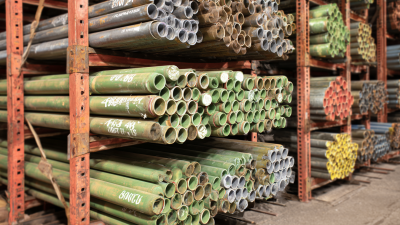
Scaffolding pipe supports international projects through familiar dimensions, simple connections, and strong load performance. Site teams can inspect each length quickly, even when local equipment differs. That matters across ports, warehouses, and remote construction zones. UNCTAD’s Review of Maritime Transport 2023 states that ships carry over 80% of global trade by volume. Therefore, compact, stackable pipe bundles can reduce unused container space and handling complexity. Yet pipe weight still affects freight costs. The cheapest design is not always the cheapest delivered option.
The World Bank’s 2023 Logistics Performance Index highlights customs, infrastructure, and shipment reliability as major logistics factors. Standardized pipe specifications can simplify documentation and replacement planning across borders. Reusable steel also supports sustainability. The World Steel Association estimates steel production creates about 7–9% of global carbon dioxide emissions. Longer service life, repairable components, and repeated project use can lower material demand. However, damaged galvanizing, unnecessary transport, and poor dismantling can erase those gains. This is where project discipline matters.
Tips: Confirm tube diameter, wall thickness, coating, and test certificates before shipment. Use load calculations for wind, platform height, and working loads. Bundle pipes by assembly zone, not only by length. Keep a small repair stock locally. A practical review should include freight, labor, reuse cycles, and disposal—not purchase price alone. Mistakes happen. Clear records make them cheaper to correct.
Why Choose Scaffolding Pipe for Global Projects? — Logistics, Cost, and Sustainability Across International Projects
| Project dimension |
Data point |
International project relevance |
Basis and qualification |
| Common tube size |
48.3 mm outside diameter × 3.2 mm nominal wall thickness |
A widely used scaffold-tube size can simplify coordination between design, procurement, and site teams. Confirm that the selected tube and couplers meet the project’s applicable local requirements. |
Common dimensions associated with EN 39 scaffold tubes; product specifications and tolerances must be checked against the applicable standard and supplier documentation. |
| Nominal tube mass |
Approximately 3.56 kg per metre, calculated for a 48.3 mm × 3.2 mm steel tube |
Provides a consistent starting point for estimating shipment mass, manual handling needs, and material quantities before final packing calculations. |
Calculated from the nominal hollow-tube dimensions and a steel density of 7,850 kg/m³. Actual mass varies with manufacturing tolerances, steel grade, and coating. |
| Illustrative piece weights |
3 m tube: approximately 10.7 kg
6 m tube: approximately 21.3 kg |
Piece length affects handling, loading plans, and delivery access. Confirm safe lifting and handling procedures for the workforce and site conditions. |
Calculated using the nominal mass of approximately 3.56 kg/m; excludes couplers and any additional coating mass. |
| Container-length planning |
Typical internal length is about 5.9 m for a 20 ft general-purpose container and about 12.0 m for a 40 ft container; actual dimensions vary. |
A nominal 6 m tube may be too long for a typical 20 ft container’s internal length. Confirm the specific container’s usable dimensions, packing method, and carrier acceptance before booking. |
Indicative industry dimensions only. Container design and internal clearances vary; verify against the actual equipment and shipping documentation. |
| Freight and landed-cost comparison |
Compare total landed cost, not purchase price alone: materials + coating or fabrication + packing + freight + insurance + duties + handling + inspection. |
For cross-border projects, route, port charges, customs classification, shipment size, and delivery location can materially change the delivered cost. |
Cost components are a procurement framework, not quoted market prices. Obtain current, route-specific freight and duty quotations. |
| Reusable asset potential |
Steel tubes can be inspected and reused when they remain serviceable and comply with project and local safety requirements. |
Repeat use across project phases or locations can reduce replacement demand and material purchasing. Inspection, maintenance, tracking, and return logistics determine whether reuse is practical. |
Reuse is conditional on condition and compliance; no fixed number of safe reuse cycles applies to every tube or project. |
| End-of-life recovery |
Steel is a recyclable material; actual recovery depends on collection, sorting, local recycling infrastructure, and material condition. |
Planning for segregation and return of steel components can support material recovery after temporary works are dismantled. |
Recyclability does not guarantee that a product will be collected or recycled in a particular country or project. |
| Standards and verification |
Check tube specifications, coupler compatibility, structural design, inspection requirements, and applicable national regulations before procurement. |
International projects may span different codes and approval processes. A familiar nominal tube size does not, by itself, establish compliance or structural suitability. |
Reference points include ISO 668:2020 for series 1 freight-container classification and dimensions, and the relevant edition of EN 39 where applicable. Confirm current standards and local rules. |
Planning note: Values marked as calculated or typical are indicative. Confirm final dimensions, weights, packing limits, costs, and regulatory requirements with the project engineer, supplier, freight provider, and local authorities.

 +86 18531742341