10 Essential Tips for Using Ringlock Scaffolding Stairs Effectively?
When working with Ringlock Scaffolding Stairs, safety and efficiency are paramount. These stair systems offer superior access to elevated work areas. However, their effectiveness depends on proper usage and understanding. Knowing how to use them correctly is essential for any construction project.
The design of Ringlock Scaffolding Stairs allows for quick assembly and disassembly. Yet, improper setup can lead to accidents. Workers may overlook the importance of secure alignment and stability. It is crucial to ensure the stairs are level and firmly locked in place. Small missteps in this process can have serious consequences.
Additionally, optimal communication among team members is vital. Everyone should be aware of stair usage protocols. Sometimes, people might underestimate potential hazards. Installing warning signs or reminders can help keep safety in mind. By taking these precautions, users will maximize the benefits of Ringlock Scaffolding Stairs.
Understanding Ringlock Scaffolding Stairs and Their Components
Ringlock scaffolding stairs are vital for safe access on construction sites. They consist of modular components that interlock securely, providing stability. Each stair unit typically includes platforms, treads, and guardrails, designed to meet rigorous safety standards. According to industry data, effective scaffolding reduces accidents by up to 50%. Understanding the components ensures proper installation and use.
When using Ringlock scaffolding stairs, always check for alignment. Misaligned components can lead to hazards. Before use, ensure that the stairs are secure and free of debris. Regular inspections are crucial. Reports suggest that about 30% of scaffold-related accidents are due to equipment negligence.
Proper training for all personnel is essential. Everyone should know how to set up and use the stairs correctly. Short training sessions can significantly enhance safety. It takes only a few moments to ensure everyone understands the risks. Frequent communication can also help prevent accidents. Reflect on past incidents to improve overall safety protocols.
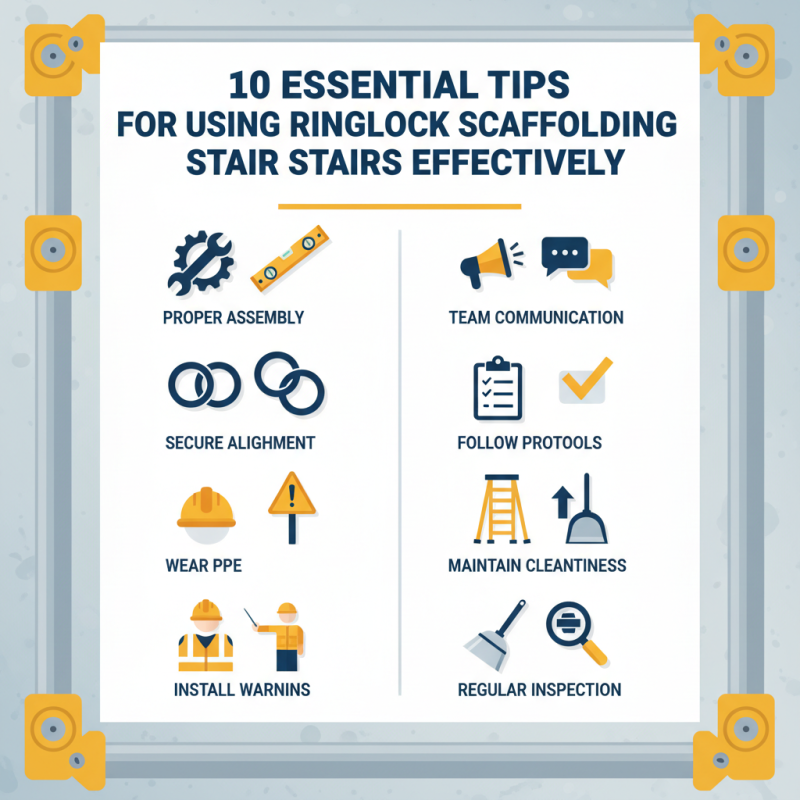
10 Essential Tips for Using Ringlock Scaffolding Stairs Effectively
| Tip |
Description |
| 1. Inspect Regularly |
Perform routine inspections to ensure structural integrity and safety. |
| 2. Proper Installation |
Follow manufacturer guidelines for assembling the scaffolding stairs. |
| 3. Use Anti-Slip Treads |
Incorporate anti-slip materials on treads to enhance grip. |
| 4. Maintain Clear Pathways |
Ensure stairs are free from debris and obstacles to prevent accidents. |
| 5. Use Guardrails |
Install guardrails to provide additional safety for users. |
| 6. Train Workers |
Provide training on safe use and best practices for scaffolding stairs. |
| 7. Load Limits |
Adhere to specified load limits to prevent structural failure. |
| 8. Weather Considerations |
Avoid using scaffolding stairs in hazardous weather conditions. |
| 9. Use Personal Protective Equipment (PPE) |
Ensure all workers wear the appropriate PPE while using scaffolding. |
| 10. Regular Maintenance |
Schedule regular maintenance to keep scaffolding in safe working condition. |
Ensuring Safety: Key Safety Protocols for Using Scaffolding Stairs
When using scaffolding stairs, safety is paramount. Inspect each stair section before use. Ensure they are stable and secure. Any signs of wear or damage need immediate attention. Tighten loose components regularly to prevent accidents. Remember: safety gear is essential. Hard hats and non-slip shoes can make a difference.
Training should never be overlooked. All workers need proper instruction on using scaffolding stairs. Misunderstandings can lead to injuries. Encourage clear communication among team members. If someone feels uncomfortable, they should speak up. It’s crucial to foster an environment where safety concerns are taken seriously.
Finally, keep your workspace organized. Clutter can lead to slips and falls. Ensure tools and materials are stored properly. Make a habit of clearing the area before and after use. Reflect on daily operations and adjust as necessary. Continuous improvement in safety practices can save lives.
Proper Installation Techniques for Ringlock Scaffolding Stairs
When installing Ringlock scaffolding stairs, proper techniques are crucial for safety and efficiency. Research shows that falling accidents account for 35% of construction site injuries, often due to poorly installed access points. Ensuring that each stair section is securely locked and aligns with the scaffold platform is essential.
Check for stability before use. Any wobbling can indicate a need for adjustment. Secure the base on a firm surface to prevent shifting. Always use the correct number of locking pins in the right positions. If mistakes occur, it can lead to dangerous slips.
Plan installation in dry conditions. Wet surfaces can lead to slipping during assembly and disassembly. Always have enough workers for the task; ideally, a team of two or three is recommended. This helps in distributing the load and reduces individual risk.
Regularly inspect the stairs. Look for signs of wear or damage. Slight flaws can result in significant issues later. Training workers on these inspection techniques enhances safety practices and reduces accidents. Focus on these details and ensure everyone completes their tasks.
Maintenance Tips for Longevity of Scaffolding Stair Systems
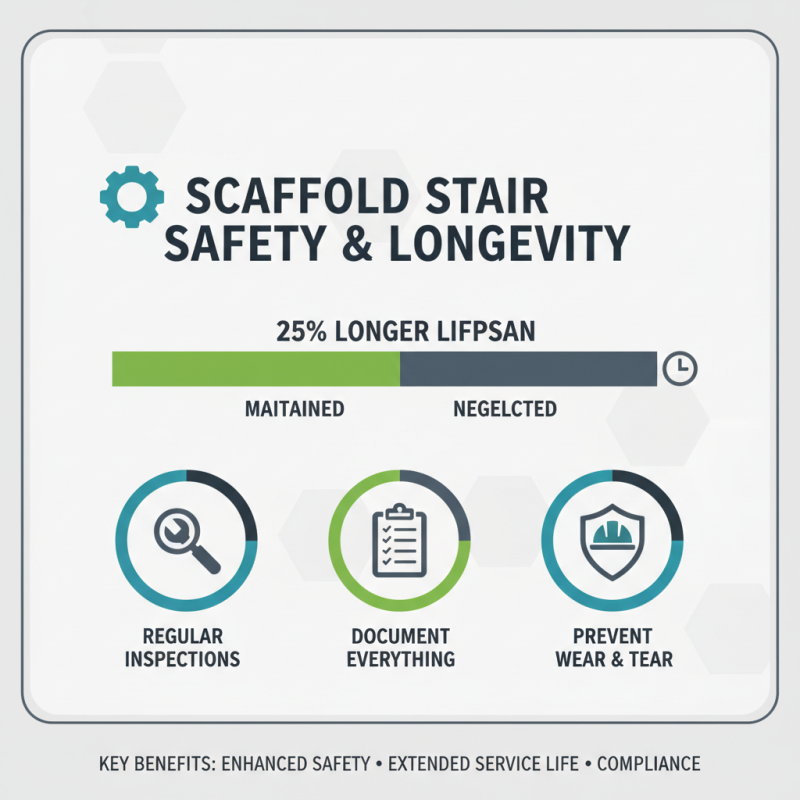
Proper maintenance of scaffolding stair systems is crucial for safety and longevity. According to industry reports, a well-maintained scaffolding system can last up to 25% longer than a neglected one. Regular inspections should be conducted to check for any signs of wear and tear, such as rust or loose components. These inspections should be documented meticulously to ensure compliance with safety standards.
Ensure that all bolts and nuts are tightened to the manufacturer's specifications. An important tip is to use a torque wrench for accurate measurement. It’s easy to overlook this, but loose fixtures can lead to serious accidents. In fact, about 60% of scaffolding-related injuries are due to equipment failure linked to inadequate maintenance.
Another maintenance aspect is cleaning. Scaffolding stairs can accumulate dirt and debris over time. This not only affects traction but can also lead to premature deterioration. Use a high-pressure washer to maintain cleanliness. Keep in mind that improper cleaning can strip protective coatings. Always use the right cleaning solutions to avoid damaging materials.
Incorporating these maintenance tips will not only enhance the lifespan of scaffolding but also safeguard workers on-site. Remember, overlooking small details can have serious implications during construction. Regular upkeep is a non-negotiable necessity.
Best Practices for Maximizing Efficiency with Scaffolding Stairs
Using scaffolding stairs effectively requires attention to detail. Safety should always be a priority. Inspect the stairs before use. Look for signs of wear or damage. A loose step can lead to accidents. Ensure that all components are properly secured. It’s better to spend a few minutes checking than to face consequences later.
Communication among team members is crucial. Assign a designated spotter when moving materials. This helps maintain focus and reduces the risk of dropping items. If someone is on the stairs, make sure all activity around them is controlled. It's easy to overlook this, but it can make a big difference in creating a safe environment.
Additionally, consider the workflow on-site. Position the stairs for optimal traffic flow. Ensure that they do not obstruct access to other areas. It might feel easier to place them haphazardly, but this leads to chaos. Reflect on your setup regularly. What works today may not be efficient tomorrow. Adapt as needed for best results.
10 Essential Tips for Using Ringlock Scaffolding Stairs Effectively

 +86 18531742341